 PhoneSitter
A babysitter for your iPhone.
Arm it, put it down, walk away. Pick-up, tilt, unplugged charger, pulled out of a pocket – PhoneSitter sounds the alarm. Only Face ID or your passcode can stop it.
How it works
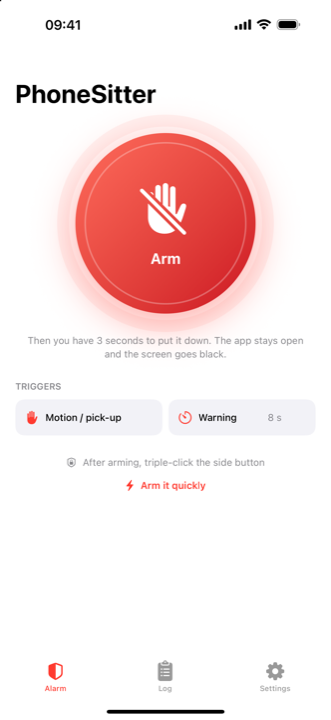
Arm and put it down
Tap Arm, you have 3 seconds to put the iPhone on the table.
Someone touches it
A pick-up, a tilt or a pulled charger starts the warning countdown.
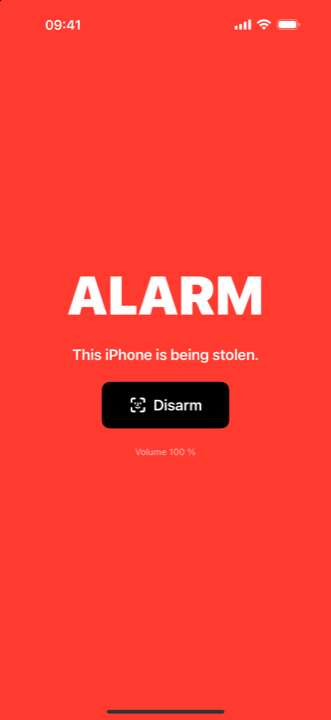
Face ID – or siren
Disarm in time, or the siren, flashing light and a voice announcement go off.
More than a motion alarm
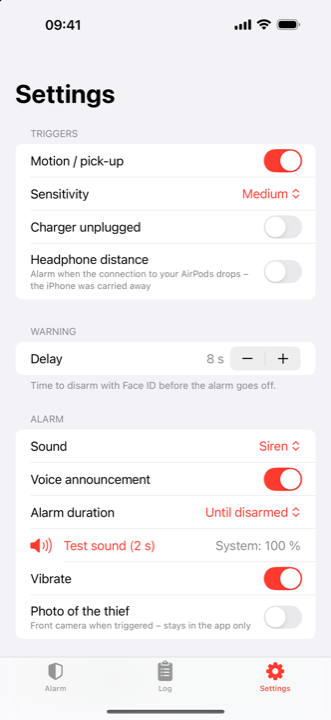
Pocket mode
Alarm when the iPhone is pulled out of a pocket or backpack – walking doesn’t set it off.
Headphone distance
Alarm when your AirPods lose the connection – the iPhone was carried away.
Photo of the thief
The front camera takes a picture when it triggers. Optionally a copy goes to your private iCloud – even if the iPhone is gone.
Silent alarm
No sound, no light, no vibration, dark screen – only the photo and the log. Catch someone unnoticed.
Apple Watch
Arm and disarm from your wrist.
Quick to arm
Action Button, Lock Screen, Control Center, Siri and Shortcuts automations.
See it in action
FAQ
Does it work with the screen locked?
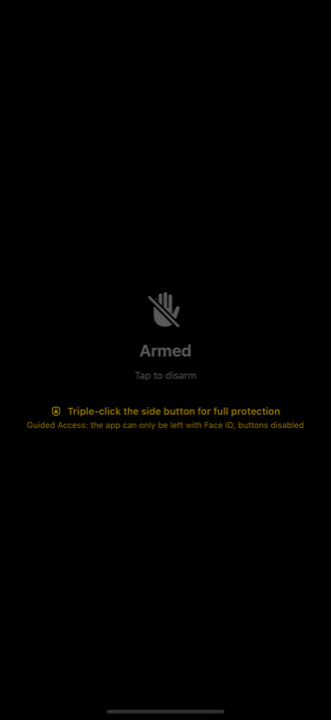
PhoneSitter protects while the app is open and in front – that is how Apple allows a theft alarm to work. With iOS Guided Access nobody can leave the app, lock the iPhone or turn the volume down without Face ID or your code. The app explains the setup step by step.
Can a thief just turn the iPhone off?
Switching off with the buttons can’t be prevented by any app. Guided Access with the side and volume buttons disabled helps. We say this openly instead of promising too much.
Where does the photo of the thief go?
It stays in the app on your iPhone. If “Save photo to iCloud” is on, a copy goes to your private iCloud (Apple CloudKit). We never see it. You can turn it off in Settings.
Which devices?
iPhone and iPad with iOS/iPadOS 18 or later, plus an Apple Watch app (watchOS 10 or later).
Which languages?
English, German, Spanish, French, Italian, Brazilian Portuguese, Thai, Japanese, Korean and Simplified Chinese.